Skip to content
When buying a house in New York, look at five things first: the home inspection report, property taxes, closing costs (including mandatory attorney fees), whether it’s a co-op or condo, and how the location NYC, Saratoga County, or elsewhere upstate affects price and resale value. Skipping any of these can cost you thousands after closing.
New York is not one market. A move from NYC vs upstate homes changes almost every rule of the game: price per square foot, taxes, HOA fees, even whether you need a lawyer at the closing table (you do, everywhere in the state).
1. Get a New York Home Inspection — Don’t Skip It
A home inspection is your best protection against buying a house with hidden problems. In New York, older housing stock (especially upstate and in older NYC boroughs) means inspectors regularly find:
- Aging roofs and old wiring (knob-and-tube in older homes)
- Basement or foundation moisture — common in the Hudson Valley and Capital Region
- Outdated heating oil tanks (some towns require tank inspections before sale)
- Septic systems in rural areas, which aren’t covered by a standard inspection
Tip: In competitive markets, buyers sometimes waive inspections to win a bidding war. In New York, that’s a real risk — always try to negotiate at least an “informational” inspection, even in a hot market.
2. Understand New York Areas Property Taxes Before You Fall in Love With a House
New York property taxes vary enormously by county and school district — this is one of the biggest budget surprises for new buyers.
- NYC has a separate, lower effective tax structure tied to assessed value formulas.
- Upstate counties, including Saratoga County, often have higher effective tax rates but lower home prices overall.
- Always check the STAR exemption eligibility — it can meaningfully reduce your school tax bill.
- Pull the last 2–3 years of tax history on any home you’re serious about; assessments can jump after a sale.
Two homes at the same price in different school districts can have a $5,000+ annual tax gap. Always compare tax bills, not just list prices.
Read more detail: How Much Does It Cost to Buy a Home?
3. Budget for NY Closing Costs — Including a Mandatory Attorney
New York is an attorney-required state for real estate closings. Unlike many other states, you cannot close on a home purchase in New York without a licensed real estate attorney representing you.
Typical NY closing costs for buyers include:
- Attorney fees (roughly $1,500–$3,000+, varies by transaction complexity)
- Title insurance and title search fees
- Mortgage recording tax (varies by county; higher in NYC)
- Bank/lender fees, appraisal, and recording fees
- Transfer taxes (usually seller-paid, but negotiable)
Plan for 2%–5% of the purchase price in total closing costs, depending on where in the state you’re buying. NYC transactions tend to run higher than upstate ones due to mortgage recording tax and co-op/condo-specific fees.
4. Co-op vs Condo NY: Know the Difference Before You Bid
If you’re buying in NYC, this is one of the most important distinctions in the entire state.
Co-op (Cooperative):
- You buy shares in a corporation, not real property
- Requires board approval — often including financial disclosures and interviews
- Usually lower price per square foot than condos
- Stricter rules on subletting, renovations, and financing (many require 20%+ down)
Condo (Condominium):
- You own real property outright
- Easier to finance, rent out, or resell
- Higher purchase price and monthly common charges, but more flexibility
- Board approval is typically a formality (right of first refusal), not a full vetting process
Outside NYC, most homes are traditional single-family properties, so this distinction mainly matters if you’re house hunting in the five boroughs or nearby co-op-heavy suburbs.
5. NYC vs Upstate Homes: Location Changes Everything
New York’s real estate landscape splits sharply between downstate and upstate markets.
| Factor | NYC / Downstate | Upstate (e.g., Saratoga County) |
| Median home price | Higher, often $700K+ | More affordable, wide range |
| Common home type | Co-ops, condos, multifamily | Single-family, land-heavy lots |
| Property tax style | Assessment-based, complex | County + school district based |
| Closing timeline | Can be slower (board approvals) | Often faster |
| Inspection concerns | Older buildings, shared systems | Septic, wells, oil tanks |
If you’re weighing NYC vs upstate homes, think beyond price — commute, school districts, resale liquidity, and lifestyle all factor in.
Ballston Spa Market Trends: A Closer Look at Saratoga County
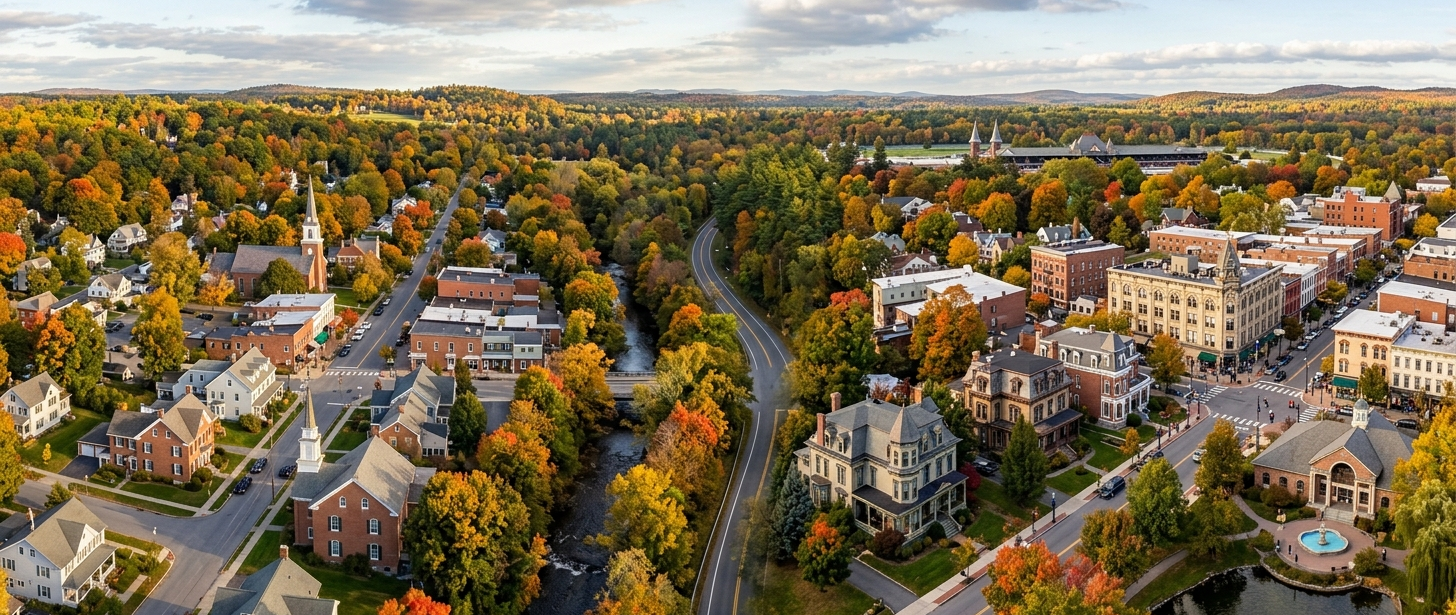
Saratoga County, including Ballston Spa has become one of the more active upstate markets in recent years, driven by proximity to Saratoga Springs, the Capital Region job market, and relative affordability compared to downstate New York.
What buyers in this area should watch for:
- Inventory levels: Ballston Spa and surrounding Saratoga County towns have seen tighter inventory, which can mean multiple-offer situations on well-priced homes.
- School district boundaries: Home values here track closely with the Ballston Spa Central School District and neighboring districts.
- New construction: Growth around the Luther Forest / GlobalFoundries corridor has increased demand and new development in the area.
- Well and septic systems: Many Saratoga County homes outside village centers use private well and septic — always get these tested separately from a standard home inspection.
Local trends shift quickly, so working with a team that tracks Ballston Spa market trends closely, not just statewide averages makes a real difference in offer strategy and timing.
Read more: Ballston Spa vs Saratoga Springs: Which Is the Better Place to Buy a Home?
Quick Checklist: What to Look for When Buying a House in New York
- ✅ Full home inspection (plus septic/well/oil tank tests if applicable)
- ✅ Property tax history and STAR exemption eligibility
- ✅ Total closing costs, including your required attorney
- ✅ Co-op vs condo rules, if buying in NYC
- ✅ School district boundaries and local market trends
- ✅ Title search and any liens on the property
- ✅ Flood zone status, especially near the Hudson River or coastal areas
Buying a first house you muse know about: What Credit Score Is Needed To Buy A House
Frequently Asked Questions
Do I need a lawyer to buy a house in New York?
Yes. New York is one of a small number of states where a real estate attorney is legally required to represent buyers at closing. Your realtor cannot substitute for this role.
What are typical closing costs in New York?
Buyers should budget roughly 2%–5% of the purchase price for NY closing costs, covering attorney fees, title insurance, mortgage recording tax, and lender fees. NYC transactions tend to run on the higher end.
Is it better to buy a co-op or a condo in NYC?
It depends on your goals. Co-ops are usually cheaper upfront but come with board approval and stricter financing rules. Condos cost more but offer easier resale, rental flexibility, and simpler ownership.
Are property taxes higher in NYC or upstate New York?
NYC generally has lower effective property tax rates due to its assessment formula, while upstate areas, including parts of Saratoga County, can have higher effective rates — though home prices are typically much lower overall.
Is Saratoga County a good place to buy right now?
Saratoga County, including Ballston Spa, has seen steady demand driven by job growth and relative affordability compared to downstate New York. Inventory can be tight, so working with a local agent who tracks current Ballston Spa market trends helps buyers move quickly on the right home.
Ready to Buy a Home in New York?
Whether you’re comparing NYC vs upstate homes or focused specifically on Saratoga County, Go Lyst Agency LLC helps buyers navigate New York real estate with local, statewide expertise from your first search to closing day.
Go Lyst Agency Ballston Spa — reach out today to talk through your home search, budget, and the New York-specific steps you can’t afford to skip.